





Although dryandras are desirable garden plants they have not achieved the same degree of widespread cultivation as banksias. This is undoubtedly due to the fact that their natural habitat makes them difficult to maintain in cultivation in the heavily populated areas of the Australian east coast. Some success has been achieved with species such as D.formosa and D.praemorsa in inland New South Wales and Queensland but the genus is not particularly reliable in coastal areas of those two states. On the other hand, good results have been achived with a range of species in Victoria and in the south-east of South Australia, particularly in sandy, well drained soils. Generally the genus can be regarded as very suitable for areas with a Mediterranean-style climate with wet winters and fairly dry summers.
There are several species which can be grown to flowering stage in less suitable districts. These include D.praemorsa, D.tenuifolia, D.pteridifolia and D.fraseri but even these should not be regarded as long term garden plants in these areas.
With many different forms, growth habits and flower colours, dryandras can be used for many different purposes in the garden. In addition, the flowers of all dryandras produce nectar and are excellent for attracting birds.
Like most members of the Protea family, dryandras have a distinctive root system ("proteoid roots") consisting of tight groupings of many small "rootlets". These are believed to enable the plants to more efficiently take up nutrients from the nutrient-deficient soils where many of the species occur naturally. In cultivation this means that the plants can be adversely affected by fertilizers, particularly phosphorus. It is generally recommended that dryandras and other Proteaceae be fertilised only with low-phosphorus, slow-release fertilisers or not be fertilised at all.
 |
Proteoid roots can often be seen by carefully removing a proteaceous plant from its pot, as shown here. Click the thumbnail image or the highlighted phrase for a higher resolution image [39k].
|
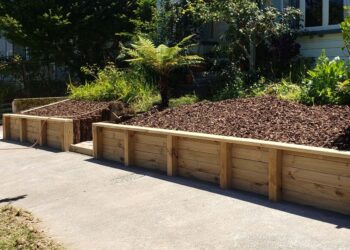
In cultivation all species perform best in well-drained soils and generally resent continually wet soils. Shallow clay soils can present problems but if garden beds are built up to 300-600mm, greater success is experienced. Dryandras are generally at their best in open, sunny positions although the plants will tolerate some shade but probably with reduced flowering.
Like many plants, a number of Dryandra species are susceptible to the root rot fungus, Phytophthora cinnamomi. This has caused serious environmental problems in some natural stands of native flora (including banksias and dryandras) in Western Australia. The most dramatic effect of Phytophthora is the sudden demise in a matter of days of an apparently healthy plant. Improvement of soil drainage is the best means of minimising attack in areas where Phytophthora is known to exist.
[Return to Dryandra Index] [ASGAP Home]
Updated: Friday 27 January 2006.
|